Infant (3-12 Months)
Milestones, memories, and modern parenting hacks, minus the premium price tag.


Navigating the First Year
The infant stage is where everything starts changing quickly. Your baby is no longer just sleeping, feeding, and settling. Between 3 and 12 months, they begin smiling with intention, reaching for you, rolling, sitting, exploring textures, reacting to routines, and showing you more of their little personality every day.
This season can feel beautiful, busy, and sometimes completely unpredictable. One week your baby may sleep better, and the next week you may be searching for signs of 4 month sleep regression at 2 a.m. One month you may be celebrating new sounds and smiles, and later you may be wondering about when to start baby-led weaning, which toys are worth buying, or how to support 7 month infant developmental milestones without overthinking every little thing.
This guide is here to make caring for infant needs feel calmer, more practical, and less expensive. From sleep shifts and feeding changes to milestones, playtime, and everyday routines, every parent deserves simple support, thoughtful savings, and reassurance that both they and their baby matter through every stage.
Milestones: Discovering the World
Your baby is learning their body, their voice, and their place in the world. Milestones are helpful guideposts, but they are not a race. Some babies roll early, some sit later, some babble constantly, and some quietly observe before surprising you with a new skill overnight.
The Early Infant Stage: 3 to 4 Months
Around this stage, many parents start noticing more social connection. Your baby may smile more often, follow faces, make cooing sounds, lift their head during tummy time, and reach toward toys or familiar people. These early 3 month baby milestones can feel small, but they are huge signs of growing awareness.
You may also notice infant smiling in sleep, which can feel like the sweetest little mystery. Sometimes it is connected to normal sleep movement, reflexes, or your baby’s developing brain. Enjoy it, take the picture if you can, and try not to turn every tiny movement into a worry.
Helpful support ideas:
- Soft rattles or high-contrast toys
- A safe tummy time mat
- Simple board books
- Gentle music or singing
- Short, calm play sessions throughout the day
The Middle Infant Stage: 5 to 7 Months
This stage often brings more movement and curiosity. Your baby may roll more confidently, push up during tummy time, bring toys to their mouth, sit with support, and become more interested in your food, your voice, and your daily routine.
By this age, parents often begin looking for infant learning activities that feel useful but not overwhelming. The best activities are usually simple: talking, reading, singing, mirror play, texture play, peekaboo, and letting your baby safely reach, grasp, and explore.
If you are checking 7 month infant developmental milestones, look for progress in connection, movement, hand control, sounds, and curiosity. Your baby may be sitting more steadily, transferring toys between hands, responding to familiar voices, or showing excitement when you enter the room.
The Active Infant Stage: 8 to 12 Months
This is when your baby may become more mobile and determined. Some babies crawl, some scoot, some roll everywhere, and some go straight toward pulling up. Mobility changes the whole home, so childproofing becomes less optional and more urgent.
This is also when the best infant activity center may be something that keeps your baby safely engaged while allowing movement, reaching, and sensory play. But you do not need every expensive product. A safe floor space, soft blocks, stacking cups, board books, and supervised exploration can do a lot.
Helpful support ideas:
- Soft blocks and stacking cups
- Baby-safe mirrors
- Push-and-pull toys
- Sensory balls
- Music toys
- Board books with textures
- Safe open-floor movement time


Sleep & Routine
Infant sleep changes a lot during the first year. Just when you think you understand your baby’s rhythm, a growth spurt, teething, separation anxiety, or developmental leap may shift everything again.
This does not mean you are doing something wrong. It means your baby is growing.
Safe Sleep Basics
Many parents search when can infant sleep on tummy because babies often roll during sleep or seem more comfortable that way. The safest approach is to always place your baby on their back for sleep. If your baby can roll both ways independently, your pediatrician can help you understand what is appropriate for your baby’s stage and safety needs.
Keep sleep spaces simple:
- Firm, flat mattress
- No pillows, blankets, bumpers, or loose items
- Baby placed on their back
- Comfortable room temperature
- Sleepwear that does not overheat baby
An infant sleeping bag or wearable blanket can be helpful when used correctly because it keeps baby warm without loose blankets in the crib. Choose the right size, check the temperature rating, and stop swaddling once baby shows signs of rolling.
The 4-Month Sleep Shift
Around 3 to 5 months, sleep can suddenly feel harder. Parents may notice more night waking, shorter naps, fussier evenings, or a baby who used to sleep well but now wakes more often. These may be signs of 4 month sleep regression.
This stage can feel exhausting, but it is often connected to maturing sleep cycles and development. Your baby is becoming more aware of the world, and that awareness can show up at bedtime.
Gentle 4 month sleep regression tips:
- Keep bedtime calm and predictable
- Use the same short routine each night
- Offer comfort without creating pressure
- Watch wake windows, but do not obsess
- Keep daytime naps as consistent as possible
- Ask for help when nights feel too heavy
Sleep progress is not always straight. Some weeks will feel settled, and others will feel messy. You are not failing because your baby wakes up.
Naps, Teething & Separation Anxiety
As your baby gets older, naps may slowly become more predictable. Many infants move toward two naps later in the first year, but timing can vary. Teething can also disturb sleep, especially when your baby is uncomfortable or needing extra closeness.
Separation anxiety can appear as your baby begins to understand that you exist even when you leave the room. This can make bedtime emotional. A steady routine, a calm voice, and predictable goodnights can help your baby feel secure.
Feeding Transitions, From Milk to First Foods
Feeding changes during the infant stage can feel exciting and nerve-wracking. Milk remains important, but around the middle of the first year, many babies begin exploring solids when they show readiness.
Starting Solids
Many parents wonder when to start baby led weaning or whether they should begin with purees. Most babies start solids around 6 months, but readiness matters more than the calendar alone.
Signs baby may be ready:
- Sitting with support
- Good head and neck control
- Interest in food
- Opening mouth when food is offered
- Bringing objects to mouth
- Less tongue-thrust reflex
A gentle baby led weaning guide can help parents understand how to offer soft, safe foods while still following baby’s pace. Some families use baby-led weaning, some use purees, and many do a mix of both. The goal is not to follow a trend. The goal is to help your baby explore food safely and comfortably.
First Foods & Mealtime Confidence
Start simple. Soft fruits, cooked vegetables, iron-rich foods, and easy textures can help baby learn taste, chewing motions, and hand-to-mouth coordination.
Helpful mealtime items:
- Soft bibs
- Suction bowls
- Baby spoons
- Small open cup or straw cup
- Easy-clean high chair
- Soft washcloths
- Freezer trays for homemade portions
Feeding can be messy. That mess is part of learning. Babies explore food with their hands, face, mouth, and sometimes the floor. You are not doing it wrong if mealtime looks chaotic.
Allergens & Safety
Common allergens may be introduced once your baby is ready for solids, but parents should move carefully, especially if there is eczema, known allergies, or family allergy history. When in doubt, ask your pediatrician before introducing higher-risk foods.
Always supervise meals, avoid choking hazards, and prepare foods in safe sizes and textures for your baby’s stage.

Play, Learn & Everyday Connection
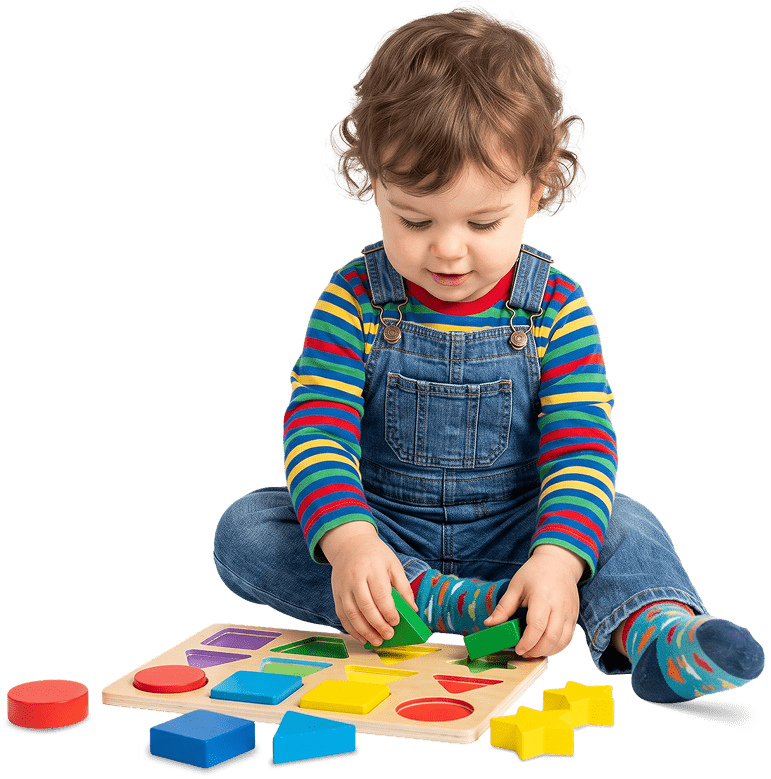
You do not need a perfect playroom to support your baby’s development. Babies learn through your face, your voice, your touch, your routine, and simple moments repeated with love.
Infant Learning Activities
The best infant learning activities often look ordinary:
- Talking during diaper changes
- Singing during bath time
- Reading the same board book again
- Letting baby reach for a toy
- Playing peekaboo
- Naming objects around the room
- Offering safe textures to touch
- Giving baby floor time to move
These moments build language, confidence, coordination, and connection.
Infant Arts and Crafts Activities
For very young infants, infant arts and crafts activities should be simple, safe, and sensory-based. This is not about making perfect crafts. It is about letting your baby experience color, texture, sound, and movement with supervision.
Simple ideas:
- Mess-free paint in a sealed bag
- Handprint or footprint keepsakes
- Texture boards with safe fabrics
- Water play with supervision
- Crinkle paper sounds
- Tummy time with colorful cards
Keep activities short. Babies can become overstimulated quickly. A few calm minutes are enough.
Choosing Helpful Baby Products
The baby product world can pressure parents into thinking they need everything. You do not. Focus on items that support daily life, safety, comfort, and development.
Useful infant picks may include:
- Soft play mat
- Safe teething toys
- Board books
- Wearable blanket
- High chair
- Baby spoons
- Stacking cups
- Activity center
- Diapering supplies
- Comfortable carrier
- Gentle bath items
Savings matter because babies grow quickly. Choosing practical products, deals, and essentials can help parents feel supported without overspending.
Emotional Support for Parents
The infant stage can be joyful and draining at the same time. Your baby may smile at you in a way that melts your heart, then wake every two hours the same night. You may feel proud one moment and overwhelmed the next.
That is normal.
Parents need support just as much as babies need care. Your rest, meals, mental health, budget, and confidence all matter. A calm parent is not a perfect parent. A calm parent is someone who has help, information, and room to breathe.
Helpful reminders:
- You do not need to buy everything at once
- Your baby does not need a perfect routine to feel loved
- Milestones are not a competition
- Asking for help is responsible, not weak
- Savings and support can make parenting feel lighter
- Your baby benefits when you are cared for too
Final Thoughts, Growing Together
Every infant develops on their own timeline. Some babies babble early. Some focus on movement. Some sleep better than expected, while others need more time and comfort. Some love solids right away, while others need a slower start.
Try not to measure your baby against every chart, post, or parent group comment. Milestones are helpful, but your baby is more than a checklist.
This stage is about learning together. You are learning their cues, their rhythms, their favorite sounds, their tired signs, and their tiny ways of asking for comfort. They are learning your voice, your touch, your routines, and your love.
Take the savings when they help. Use the guides when you need clarity. Trust your pediatrician when something feels off. And remember: your baby matters, but so do you.
One nap, one feeding, one giggle, one messy milestone at a time.
Enter Our Monthly Baby Essentials Giveaway
Each month, we curate trusted baby brands and must-have essentials for one lucky Canadian family. Register today to enter and unlock exclusive brand offers.
Support That Fits
Family Life
Helping You Feel More Prepared
Parenting can feel overwhelming when every answer sounds different. Discover baby freebies, trusted products, coupons, giveaways, and resources designed for families.
Explore articles on pregnancy, baby care, milestones, products, routines, and everyday family life, with practical tips for every stage.
- Baby Freebies : Every little thing matters, freebies, rewards & samples that make everyday family needs a little easier.
- Parenting Resources: Parenting brings love, worry, and questions. Find gentle resources and advice to help you feel less alone now.
- Trusted Partners: Meet caring brands with helpful products, services, and offers made for family-friendly deals.
- Daily Support: Baby freebies, parenting resources, trusted products, savings, giveaways, and practical help for everyday parenting.
Frequently Asked
Questions
Trusted parenting insights, product recommendations, and family advice all in one place.
Is It Normal That My Baby Is Not Rolling, Sitting, or Crawling Yet?
Why Is My Baby Suddenly Waking Up So Much Again?
When Should I Start Giving My Baby Solid Food?
What Can I Do With My Baby All Day?
How Can I Make Infant Care Feel Less Overwhelming?
Built Around Parenthood

First Trimester Pregnancy Checklist

Healthy Pregnancy Signs

Bleeding and Spotting in Early Pregnancy

Best Baby Foods in the US
Hospital Bag Checklist for US Parents

Getting Free Baby Registry Gifts
MyBellaBaby Family
A glimpse into real families, little smiles, and MyBellaBaby moments that bring our community together.